
+
R: 3 / I: 2
However, some observations:
1. the King as a zombie retains more memories than an ordinary zombie. And he is always calmer.
2. when the physician's disciple blocked zombies at the entrance of the secret passage (while already infected), he wanted to save people by his body. The effect of a slower rate of infection could be explained by his will.
The show emphasizes portraying the Crown Prince's morally leftist side, yet I find myself completely uninterested and unmoved by it. Personally I was very impressed by the physician Sophia who fits my definition of nobility and even royalty.
Another instance of Sophia - Kingdom Season 1
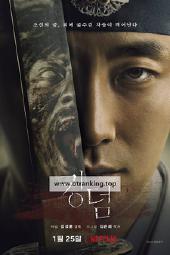
At first I just wanted to get a feel for modern Korean dramas, so I wasn't going in specifically for the zombie genre. For example, I've never watched "Train to Busan", and never been interested in supernatural-themed shows. But I'm now curious: why aren't people more willing to explore a kind of zombie psychology? I mean, from the perspective of the writers and the screenplay. Sometimes I feel like the exploration of consciousness has become somewhat a mainstream in popular culture, but by looking at this, it doesn't quite seem that way either. There's some brief medical or pathological explanation of this, but the nature of zombies as a phenomenon never really gets treated with any meaningful depth. There are two instances in the drama depicting interactions between zombies and humans (aside from the king), that attempt to evoke sympathy or an emotional response from the audience, but they still come across as very shallow.However, some observations:
1. the King as a zombie retains more memories than an ordinary zombie. And he is always calmer.
2. when the physician's disciple blocked zombies at the entrance of the secret passage (while already infected), he wanted to save people by his body. The effect of a slower rate of infection could be explained by his will.
The show emphasizes portraying the Crown Prince's morally leftist side, yet I find myself completely uninterested and unmoved by it. Personally I was very impressed by the physician Sophia who fits my definition of nobility and even royalty.
+
R: 3 / I: 0
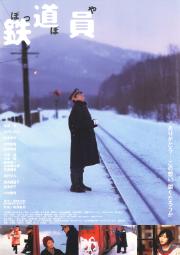
The railroad man 1999
the stationmaster, Otomatsu, lives a life approaching my dream as a soldier-like man, sensation-less, and live only for a will. Sometimes I think I’ll do exactly his fashion in different things. This noblility is built upon one pushing a dream to its peak with everything they have, though others might see as sacrifice. His will is the noblest of all. I don’t think it deserves criticism, nor do I believe the story is truly regrettable. His wife can’t bring poetry to him, that’s all essentially illusion, she brought him something entirely secular and sentimental, trying to impose it on him, and he rejected it all outright. When I first see him clearly express his own will, in the phone call, I felt amused, yet inside I was weeping. And when I watch the film repeatedly depict his sentimental farewells with others, of course I felt sadness, but inside I’m indifferent for these, for these moments were, at their core, illusions and false. More importantly, three encounters with his ghosty daughter, is not illusions, that’s hyper reality, proves his finished nobility to ascend more. Through his own will, he sees Sophia clearly, in his consciousness. This is already approaching, if I remember rightly, the realm of the Devachan.+
R: 0 / I: 0I was overcome by a feeling of invulnerability. We might be crushed, but surely we could not be conquered.
Storm of Steel - Ernst Juenger
>…+
R: 0 / I: 0
>A l'alta fantasia qui mancò possa;
>ma già volgeva il mio disio e il velle,
>sì come rota ch’igualmente è mossa,
>l’amor che move il sole e l’altre stelle.
>Dante, Paradiso, XXXIII, 142-45
>Here my exalted vision lost its power.
>But now my will and my desire, like wheels revolving
>with an even motion, were turning with
>the Love that moves the sun and all the other stars.
>高翔的神思,至此再无力上攀;
>不过这时候,吾愿吾志,已经
>见旋于大爱,像匀转之轮一般;
>那大爱,回太阳啊动群星。
>A l'alta fantasia qui mancò possa;
>ma già volgeva il mio disio e il velle,
>sì come rota ch’igualmente è mossa,
>l’amor che move il sole e l’altre stelle.
>Dante, Paradiso, XXXIII, 142-45
>Here my exalted vision lost its power.
>But now my will and my desire, like wheels revolving
>with an even motion, were turning with
>the Love that moves the sun and all the other stars.
>高翔的神思,至此再无力上攀;
>不过这时候,吾愿吾志,已经
>见旋于大爱,像匀转之轮一般;
>那大爱,回太阳啊动群星。
+
R: 0 / I: 0
His views on women in this novel seem to be completely the same as Weininger's concepts, at least with a similar temperament. But this reveals (perhaps exactly the author, but not only the protagonist in the novel) an obviously high libido for women, not hatred.
My favorite part is … the revelation of the relationship between the woman and the musician, and the intermittent intervention of the protagonist with strong jealousy. Amazing writing. So one of the forms of true love (though it's fleeting and uncertain) is revealed here.
I think Tolstoy himself might often resented Sophia's lack of ability. When a man finds out that his wife can only give birth, or do the housework, or transcribe (his works) - she has nothing else to do - he will only be disappointed.
Btw the immediate escape of the musician guy is classic. I like this moment.
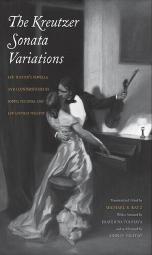
Kreutzer Sonata Variations
My first time read Tolstoy. His writings were really much more agonizing than I thought.His views on women in this novel seem to be completely the same as Weininger's concepts, at least with a similar temperament. But this reveals (perhaps exactly the author, but not only the protagonist in the novel) an obviously high libido for women, not hatred.
My favorite part is … the revelation of the relationship between the woman and the musician, and the intermittent intervention of the protagonist with strong jealousy. Amazing writing. So one of the forms of true love (though it's fleeting and uncertain) is revealed here.
I think Tolstoy himself might often resented Sophia's lack of ability. When a man finds out that his wife can only give birth, or do the housework, or transcribe (his works) - she has nothing else to do - he will only be disappointed.
Btw the immediate escape of the musician guy is classic. I like this moment.

+
R: 0 / I: 0
>… One should not place the kind of spirituality within Novalis, on the same level as what Goethe had. Goethe came to it through a regulated, out of a Higher World directed course towards an initiation, up to a particular stage. Novalis, by contrast, lived a life which one can best describe by saying: This young man, who left the physical plane at the age of twenty nine and who gave the German intellectuals more than a hundred thousand others could give, he lived a life which was actually a memory of a previous one. Through a quite specific event the spiritual experiences of earlier incarnations appeared, presented themselves to his soul and flowed in gentle, rhythmically woven poems from his soul.
>Rudolf Steiner
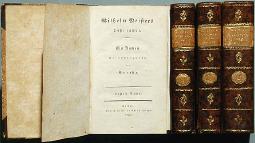
Wilhelm Meister's Apprenticeship or Heinrich von Ofterdingen
These two books are the key to unlocking the dispute of Schelling-Fichte, corresponding to the conflict between groups of Goethe & Jung, and the group of poets/naturalists led by Novalis.>… One should not place the kind of spirituality within Novalis, on the same level as what Goethe had. Goethe came to it through a regulated, out of a Higher World directed course towards an initiation, up to a particular stage. Novalis, by contrast, lived a life which one can best describe by saying: This young man, who left the physical plane at the age of twenty nine and who gave the German intellectuals more than a hundred thousand others could give, he lived a life which was actually a memory of a previous one. Through a quite specific event the spiritual experiences of earlier incarnations appeared, presented themselves to his soul and flowed in gentle, rhythmically woven poems from his soul.
>Rudolf Steiner