
+
R: 1 / I: 0
>Wirth explored his entire country far and wide. In 1910, he defended his thesis entitled The Degradation of Dutch Folk Song and already in this first work surprised others with his incredible erudition, which subjected to analysis practically all available material relating to Dutch folklore. Moreover, he attempted to construct a general model, a kind of proto-mythology that stood behind all folk art and which could help one better understand the holistic worldview of the ancient ancestors. Proceeding from the symbols and elements of Dutch antiquity, Wirth expanded the range of his ethnographic, cultural, symbolical searches first to all the Germanic lands, and then broader to Europe, Eurasia, and, finally, to the regions most distant from Europe itself: America, Oceania, Africa, and so on. In search of a formula that could generalize the worldview of the ancient Aryan ancestors, Wirth moved in a spiral, clarifying, correcting, extending, or re-considering all the information hitherto gathered by linguists, archaeologists, historians of religion and art, anthropologists, etc. His endeavor was one of incredible intensity.
>Dugin, https://txtdot.deep-swarm.xyz/get?url=https%3A%2F%2Feurasianist-archive.com%2F2017%2F04%2F13%2Fherman-wirth-runes-great-yule-and-the-arctic-homeland
Herman Wirth's dissertation on dutch folk song
I really wonder where can I find a copy (in any language) of Wirth's dissertation: The Degradation of Dutch Folk Song>Wirth explored his entire country far and wide. In 1910, he defended his thesis entitled The Degradation of Dutch Folk Song and already in this first work surprised others with his incredible erudition, which subjected to analysis practically all available material relating to Dutch folklore. Moreover, he attempted to construct a general model, a kind of proto-mythology that stood behind all folk art and which could help one better understand the holistic worldview of the ancient ancestors. Proceeding from the symbols and elements of Dutch antiquity, Wirth expanded the range of his ethnographic, cultural, symbolical searches first to all the Germanic lands, and then broader to Europe, Eurasia, and, finally, to the regions most distant from Europe itself: America, Oceania, Africa, and so on. In search of a formula that could generalize the worldview of the ancient Aryan ancestors, Wirth moved in a spiral, clarifying, correcting, extending, or re-considering all the information hitherto gathered by linguists, archaeologists, historians of religion and art, anthropologists, etc. His endeavor was one of incredible intensity.
>Dugin, https://txtdot.deep-swarm.xyz/get?url=https%3A%2F%2Feurasianist-archive.com%2F2017%2F04%2F13%2Fherman-wirth-runes-great-yule-and-the-arctic-homeland
+
R: 1 / I: 0 (sticky)
https://kollect.itinerariummentis.org/user/xenine/collections/01917d6a-671c-7424-9a3e-b67e0ae952f6
A Koillect Collection that keeps track on the records listened to.
Only great recordings will be categorized, rating 4~5:https://kollect.itinerariummentis.org/user/xenine/collections/01917d6a-671c-7424-9a3e-b67e0ae952f6
+

R: 1 / I: 1
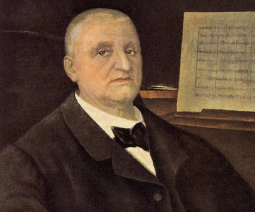
by Felix Maria Gatz
—
An immense source on philosophy and aesthetics of music. I'll scan this book maybe in 1 week, then append my reading log under this thread.
- book.itmens: https://book.itinerariummentis.org/book/10022/s/musik-asthetik-in-ihren-hauptrichtungen
Musik-Ästhetik in ihren Hauptrichtungen
ein Quellenbunch der deutschen Musik Äshthetik von Kant und der Frühromantik bis zur Gegenwartby Felix Maria Gatz
—
An immense source on philosophy and aesthetics of music. I'll scan this book maybe in 1 week, then append my reading log under this thread.
- book.itmens: https://book.itinerariummentis.org/book/10022/s/musik-asthetik-in-ihren-hauptrichtungen

+
R: 2 / I: 0
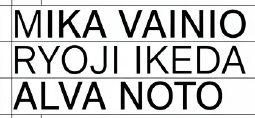
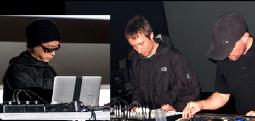
Autechre and Ryoji Ikeda Thread
Starting from a converse in itmens lounge. Also archiving here for future use. I'll apend/edit when it's neccessary.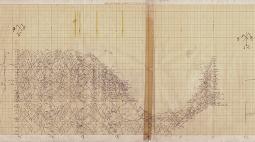
+
R: 9 / I: 5
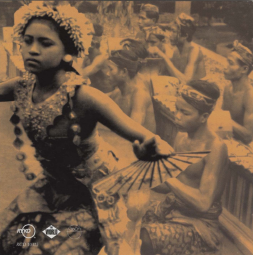
>Gamelan instrument stands have a nine-part structure, and the designs on instrument cases and gongstands often comprise a pictorial mandala (that is, a pictorial rather than geometric image of the cosmos). The carved flowers and vegetation represent the lotus and tree of life in the upper-world. Images of the protectors of shrines and temples are carved into the centers and ends of many instruments, indicating that where the musicians sit is sacred space where no evil spirits may enter. Along the bottoms of cases, profiles of crows, representing Garuda, the sacred sun eagle, guard the corners. The bottom center is carved with blossoms, fallen on the ground like votive flower offerings, and it is studded with snails representing the earth but also the sea, the underworld of the spirits.
>Gamelan music is a mandala in sound, a musical re-creation of the cosmos, played on instruments which comprise a visual mandala. These exquisite layers of meaning place the gamelan traditions of Indonesia among the world's most powerful and beautiful musical traditions.
>Sue Carole DeVale
Booklist
- Unplayed Melodies by Marc Perlman
- Gamelan by Henry Spiller (World Music Series),
- https://archive6zg5vrdwm4ljllgxleekeoj43lqayscd4d4kmhnyblq4h3ead.onion/details/GamelanTheTraditionalSoundsOfIndonesiaWorldMusic
- clearnet
- Traditions of Gamelan Music in Java by Richard Anderson Sutton (Cambridge studies in ethnomusicology):
- https://archive6zg5vrdwm4ljllgxleekeoj43lqayscd4d4kmhnyblq4h3ead.onion/details/traditionsofgame0000sutt,
- clearnet
- Formalized Music by Iannis Xenakis:
- https://archive6zg5vrdwm4ljllgxleekeoj43lqayscd4d4kmhnyblq4h3ead.onion/details/formalizedmusict0000xena_e8q1,
- clearnet
- The Myth of the Eternal Return by Mircea Eliade (Mythos: The Princeton/Bollingen Series in World Mythology):
- https://archive6zg5vrdwm4ljllgxleekeoj43lqayscd4d4kmhnyblq4h3ead.onion/details/cosmoshistorymyt00elia,
- clearnet,
- re-processed pdf
- The History of Java, Stamford Raffles:
- https://archive6zg5vrdwm4ljllgxleekeoj43lqayscd4d4kmhnyblq4h3ead.onion/details/historyjava00unkngoog
- clearnet
Releases
- Music for the Gods: The Fahnestock South Sea Expedition: Indonesia, HRT15013, booklet
- Music of Indonesia Series, Folkways Vol 1-20.
- Nonesuch, Explorer Series: Indonesia, https://www.nonesuch.com/artists/explorer-series-indonesia
- Occora, Musique traditionnelle, C583064, C561097, C560263, C582076/77, C560259.
- Yantra Sound Productions: http://www.yantrasoundproductions.org/, Gamelan of Java and Bali: https://gamelan.gs/
- Music for the Earth: https://musicfortheearth.org/, Indonesia - Wayang Golek: The Sound And Celebration Of Sundanese Puppet Theater (Asep Sunandar Sunarya), qobuz
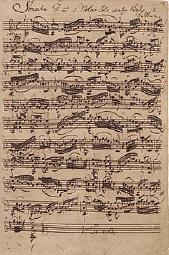
Indonesian Traditional Music Thread
I went to Indonesia to see gamelan performance when I was a child, but the exact memory has been hidden and maybe impossible to find. Being attracted to the "shimmering" Javanese court music is really the call of homesickness.>Gamelan instrument stands have a nine-part structure, and the designs on instrument cases and gongstands often comprise a pictorial mandala (that is, a pictorial rather than geometric image of the cosmos). The carved flowers and vegetation represent the lotus and tree of life in the upper-world. Images of the protectors of shrines and temples are carved into the centers and ends of many instruments, indicating that where the musicians sit is sacred space where no evil spirits may enter. Along the bottoms of cases, profiles of crows, representing Garuda, the sacred sun eagle, guard the corners. The bottom center is carved with blossoms, fallen on the ground like votive flower offerings, and it is studded with snails representing the earth but also the sea, the underworld of the spirits.
>Gamelan music is a mandala in sound, a musical re-creation of the cosmos, played on instruments which comprise a visual mandala. These exquisite layers of meaning place the gamelan traditions of Indonesia among the world's most powerful and beautiful musical traditions.
>Sue Carole DeVale
- Unplayed Melodies by Marc Perlman
- Gamelan by Henry Spiller (World Music Series),
- https://archive6zg5vrdwm4ljllgxleekeoj43lqayscd4d4kmhnyblq4h3ead.onion/details/GamelanTheTraditionalSoundsOfIndonesiaWorldMusic
- clearnet
- Traditions of Gamelan Music in Java by Richard Anderson Sutton (Cambridge studies in ethnomusicology):
- https://archive6zg5vrdwm4ljllgxleekeoj43lqayscd4d4kmhnyblq4h3ead.onion/details/traditionsofgame0000sutt,
- clearnet
- Formalized Music by Iannis Xenakis:
- https://archive6zg5vrdwm4ljllgxleekeoj43lqayscd4d4kmhnyblq4h3ead.onion/details/formalizedmusict0000xena_e8q1,
- clearnet
- The Myth of the Eternal Return by Mircea Eliade (Mythos: The Princeton/Bollingen Series in World Mythology):
- https://archive6zg5vrdwm4ljllgxleekeoj43lqayscd4d4kmhnyblq4h3ead.onion/details/cosmoshistorymyt00elia,
- clearnet,
- re-processed pdf
- The History of Java, Stamford Raffles:
- https://archive6zg5vrdwm4ljllgxleekeoj43lqayscd4d4kmhnyblq4h3ead.onion/details/historyjava00unkngoog
- clearnet
- Music for the Gods: The Fahnestock South Sea Expedition: Indonesia, HRT15013, booklet
- Music of Indonesia Series, Folkways Vol 1-20.
- Nonesuch, Explorer Series: Indonesia, https://www.nonesuch.com/artists/explorer-series-indonesia
- Occora, Musique traditionnelle, C583064, C561097, C560263, C582076/77, C560259.
- Yantra Sound Productions: http://www.yantrasoundproductions.org/, Gamelan of Java and Bali: https://gamelan.gs/
- Music for the Earth: https://musicfortheearth.org/, Indonesia - Wayang Golek: The Sound And Celebration Of Sundanese Puppet Theater (Asep Sunandar Sunarya), qobuz
+
R: 1 / I: 4
- Second Viennese School - Wikipedia: https://wikiless.deep-swarm.xyz/wiki/Second_Viennese_School
- Serial Composition and Atonality: An Introduction to the Music of Schoenberg, Berg, and Webern: https://archive6zg5vrdwm4ljllgxleekeoj43lqayscd4d4kmhnyblq4h3ead.onion/details/serialcompositio0000perl_y5p7, clearnet
- Schoenberg, Berg, and Webern : a companion to the Second Viennese school: https://archive6zg5vrdwm4ljllgxleekeoj43lqayscd4d4kmhnyblq4h3ead.onion/details/schoenbergbergwe00simm/, clearnet
- The Second Vienna school : expressionism and dodecaphony: https://archive6zg5vrdwm4ljllgxleekeoj43lqayscd4d4kmhnyblq4h3ead.onion/details/secondviennascho0000rogn, clearnet
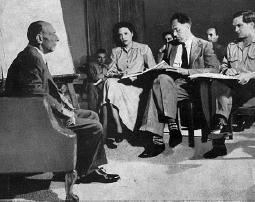
Schoenberg, Berg, and WebernThread
I still rarely listen to music from the second viennese school, except for Schoenberg. Perhaps the initial content of this thread will be a compendium of the history, and reviews of comments from Adorno.- Second Viennese School - Wikipedia: https://wikiless.deep-swarm.xyz/wiki/Second_Viennese_School
- Serial Composition and Atonality: An Introduction to the Music of Schoenberg, Berg, and Webern: https://archive6zg5vrdwm4ljllgxleekeoj43lqayscd4d4kmhnyblq4h3ead.onion/details/serialcompositio0000perl_y5p7, clearnet
- Schoenberg, Berg, and Webern : a companion to the Second Viennese school: https://archive6zg5vrdwm4ljllgxleekeoj43lqayscd4d4kmhnyblq4h3ead.onion/details/schoenbergbergwe00simm/, clearnet
- The Second Vienna school : expressionism and dodecaphony: https://archive6zg5vrdwm4ljllgxleekeoj43lqayscd4d4kmhnyblq4h3ead.onion/details/secondviennascho0000rogn, clearnet
+
R: 3 / I: 3
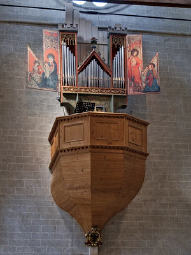
Playable antique pipe organ Thread
Note: some ripped audio files from this thread are not under the CC BY-NC-SA 4.0 license.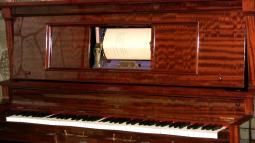
+
R: 1 / I: 1
So far,
#4 Mozart
W. A. MOZART:
Sinfonie Nr. 23 KV 181
Sinfonie Nr. 38 "Prager" KV 504
Violinkonzert Nr. 3 KV 216
Menuett C-Dur KV 409
Dirigent & Violine: Thomas Zehetmair
#3 BARTÓK / ADAMS
B. BARTÓK: Divertimento
J. ADAMS: Shaker Loops
Dirigent: Thomas Zehetmair
#2 SCHUBERT
F. SCHUBERT: Streichquartett Nr. 14 d-Moll "Der Tod und das Mädchen"
Dirigent: Thomas Zehetmair
#1 BEETHOVEN / BRAHMS / SCHOENBERG
L. V. BEETHOVEN: Streichquartett op. 95 "Serioso"
J. BRAHMS: Streichquintett op. 111
A. SCHOENBERG: "Verklärte Nacht" op. 4
Dirigent: Thomas Zehetmair
Different renditions of Mozart - Violin Concertos
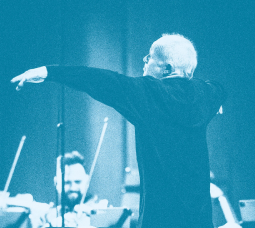
A collection that has recently become the most advanced in terms of repertoire choosing (including a new Verklärt Nacht) and which is superb in every way. Conducted by Thomas Zehetmair, and performed by the Stuttgarter Kammerorchester.So far,
#4 Mozart
W. A. MOZART:
Sinfonie Nr. 23 KV 181
Sinfonie Nr. 38 "Prager" KV 504
Violinkonzert Nr. 3 KV 216
Menuett C-Dur KV 409
Dirigent & Violine: Thomas Zehetmair
#3 BARTÓK / ADAMS
B. BARTÓK: Divertimento
J. ADAMS: Shaker Loops
Dirigent: Thomas Zehetmair
#2 SCHUBERT
F. SCHUBERT: Streichquartett Nr. 14 d-Moll "Der Tod und das Mädchen"
Dirigent: Thomas Zehetmair
#1 BEETHOVEN / BRAHMS / SCHOENBERG
L. V. BEETHOVEN: Streichquartett op. 95 "Serioso"
J. BRAHMS: Streichquintett op. 111
A. SCHOENBERG: "Verklärte Nacht" op. 4
Dirigent: Thomas Zehetmair

+

R: 0 / I: 0
Different renditions of Brahms - Symphonies
My favourite Brahms 4th symphony recording has appeared:+
R: 1 / I: 1
>It is my great privilege that my Guru Shishya Parampara (master-disciple tradition) lineage can be traced back to Baluswamy Dikshitar who was responsible for introducing and adapting the violin to Indian music in the early 19th century.
https://indianviolin.com/
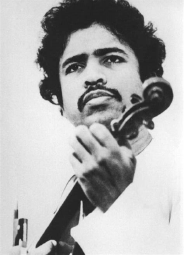
L. Subramaniam Thread
South Indian violinist.>It is my great privilege that my Guru Shishya Parampara (master-disciple tradition) lineage can be traced back to Baluswamy Dikshitar who was responsible for introducing and adapting the violin to Indian music in the early 19th century.
https://indianviolin.com/
+
R: 10 / I: 2
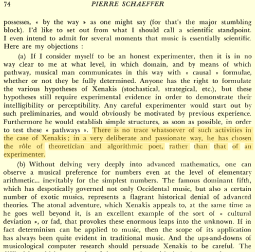
They're actually know nothing of computer, at that stage, the computer music was non-exist. The only methods were use tape recorders, do manipulations in existing sonority forms, sinusoidal wave, delays, and tried most to make them sound diverse. GRM is a playground for sound engineers.
GRM's important, because it was there, the Xenakis borned, Bohor was dedicated to Schaeffer. Bohor was too blur for Schaeffer to understand, none of them could catch up the early form, and the kind of evolutionary, in Xenakis' music. The Sonority form to GRM is kinda like the manipulation and combination of single sound coponent, and they make them as a whole, combine with other larger components. They prepared the road for future sound engineering, their descendants now will work with a DAW, and make sound effect plugins.
And, Schaeffer here was wrong. Recall what varese have said,
>I do not write experimental music. My experimenting is done before I write the music. Afterward it is the listener who must experiment.
Varese was in line with Xenakis.
On GRM and sound engineering
I was an early follower of Parmegiani-Ferrari, I wasn't surpprised by their theory, though. I was addicted to these clear fragments of sound, this preference has been developed since I was listening to musique concrete. So, their electronicacoustic is a Hi-Fi version of musique concrete. Parmegiani and his colleagues were in a wrong path, tbh. They're sound engineers for TV, then they became old-fashion artists. No training in mathe-, computer music, their devices limited their imagination. Now some pieces sound just like normal ambient, too flat.They're actually know nothing of computer, at that stage, the computer music was non-exist. The only methods were use tape recorders, do manipulations in existing sonority forms, sinusoidal wave, delays, and tried most to make them sound diverse. GRM is a playground for sound engineers.
GRM's important, because it was there, the Xenakis borned, Bohor was dedicated to Schaeffer. Bohor was too blur for Schaeffer to understand, none of them could catch up the early form, and the kind of evolutionary, in Xenakis' music. The Sonority form to GRM is kinda like the manipulation and combination of single sound coponent, and they make them as a whole, combine with other larger components. They prepared the road for future sound engineering, their descendants now will work with a DAW, and make sound effect plugins.
And, Schaeffer here was wrong. Recall what varese have said,
>I do not write experimental music. My experimenting is done before I write the music. Afterward it is the listener who must experiment.
Varese was in line with Xenakis.
+
R: 4 / I: 2
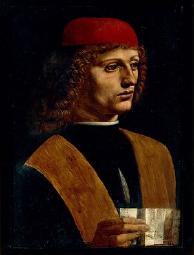
Mostly vocal compositions, including works of masses, anthems, motets, chansons & madrigals.
The background image of this chan's logo was a presumed signature of him, written on the wall of the choir gallery of the Sistine Chapel,JOSQUINJ . (https://en.cantoria-mainz.de/graffiti-edition/)
So it was probably Radulescu's mention that introduced me to this composer, and that may have been the formal initiation of my interest in the music of renaissance period, particularly in the mass genre. As before, I wasn't attracted to Beethoven's mass works in the first place, but to his, this more serene and solitary thing, extreme sentimentality.
I use this as main sources, Josquin Desprez (c.1440/55-1521) - A discography: http://www.medieval.org/emfaq/composers/josquin.html & The Other Josquin - C.M.M.E: http://www.cmme.org/database/projects/14
3rd generation of Franco-Flemish School,
Other notable contemporaries of Josquin, e.g. Heinrich Isaac (1450 – 1517), Obrecht (1457/8 – 1505), also covered under this thread.
- Franco-Flemish composers: https://wikiless.deep-swarm.xyz/wiki/Category:Franco-Flemishcomposers?lang=en
Josquin des Prés (Franco-Flemish School) Thread
Josquin des Prés (c. 1450/1455 – 27 August 1521).Mostly vocal compositions, including works of masses, anthems, motets, chansons & madrigals.
The background image of this chan's logo was a presumed signature of him, written on the wall of the choir gallery of the Sistine Chapel,
So it was probably Radulescu's mention that introduced me to this composer, and that may have been the formal initiation of my interest in the music of renaissance period, particularly in the mass genre. As before, I wasn't attracted to Beethoven's mass works in the first place, but to his, this more serene and solitary thing, extreme sentimentality.
I use this as main sources, Josquin Desprez (c.1440/55-1521) - A discography: http://www.medieval.org/emfaq/composers/josquin.html & The Other Josquin - C.M.M.E: http://www.cmme.org/database/projects/14
3rd generation of Franco-Flemish School,
Other notable contemporaries of Josquin, e.g. Heinrich Isaac (1450 – 1517), Obrecht (1457/8 – 1505), also covered under this thread.
- Franco-Flemish composers: https://wikiless.deep-swarm.xyz/wiki/Category:Franco-Flemishcomposers?lang=en
+
R: 0 / I: 0
Leos Janácek
Leos Janácek Thread
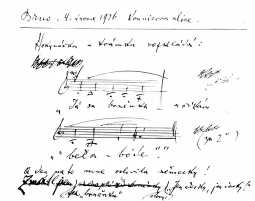
>Speech melodies are an expression of the organism's entire state and all the spiritual phases which emerge from it. They show us if a person is either stupid or sensible, sleepy or drowsy, tired or lively. They show us a child or an old man; morning and evening, lightness and darkness; heatwave or frost; loneliness or society. The art in dramatic compositions is to insert speech melodies which, as if by magic, immediately reveal a human being at a certain stage in life.Leos Janácek
+
R: 4 / I: 3
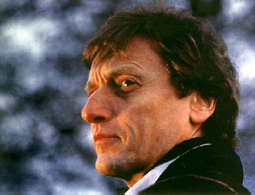
Gérard Grisey
Gérard Grisey Thread
>The exact contours of these silhouettes undergo continual change as the pitches gradually depart from the original spec trum finally transforming into noise as they grow increasingly inharmonic. The melodic silhouette determines the overall form, the tempi, and the emergence of two types of insertions: the heartbeat (short/long) and the echo. A single voice, combined with an abstract and uncompromising structure – this is my attempt to express what for me is the essence of music: the dialectics between noise and form.Gérard Grisey
+
R: 0 / I: 0
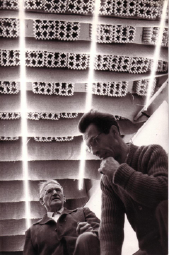
> The power of music is such that it transports you from one state to another. Like alcohol. Like love. If I wanted to learn how to compose music, maybe it was to acquire this power. The power of Dionysus.
Xenakis
> The power of music is such that it transports you from one state to another. Like alcohol. Like love. If I wanted to learn how to compose music, maybe it was to acquire this power. The power of Dionysus.
Xenakis
+
R: 0 / I: 0
Requiem - Jordi Savall - Accelerated Spirit
https://archive.org/details/jordi-savall-et-le-concert-des-nations-petite-musique-de-nuit-et-requiem-de-mozart